|
Casual Communication with Robots using Speech Recognition Module
Koaru Hirota, Fangyan Dong
Tokyo Institute of Technology
G3-49, 4259, Nagatsuta, Midori-ku, Yokohama 226-8502, Japan
E-mail: {hirota, tou}@hrt.dis.titech.ac.jp
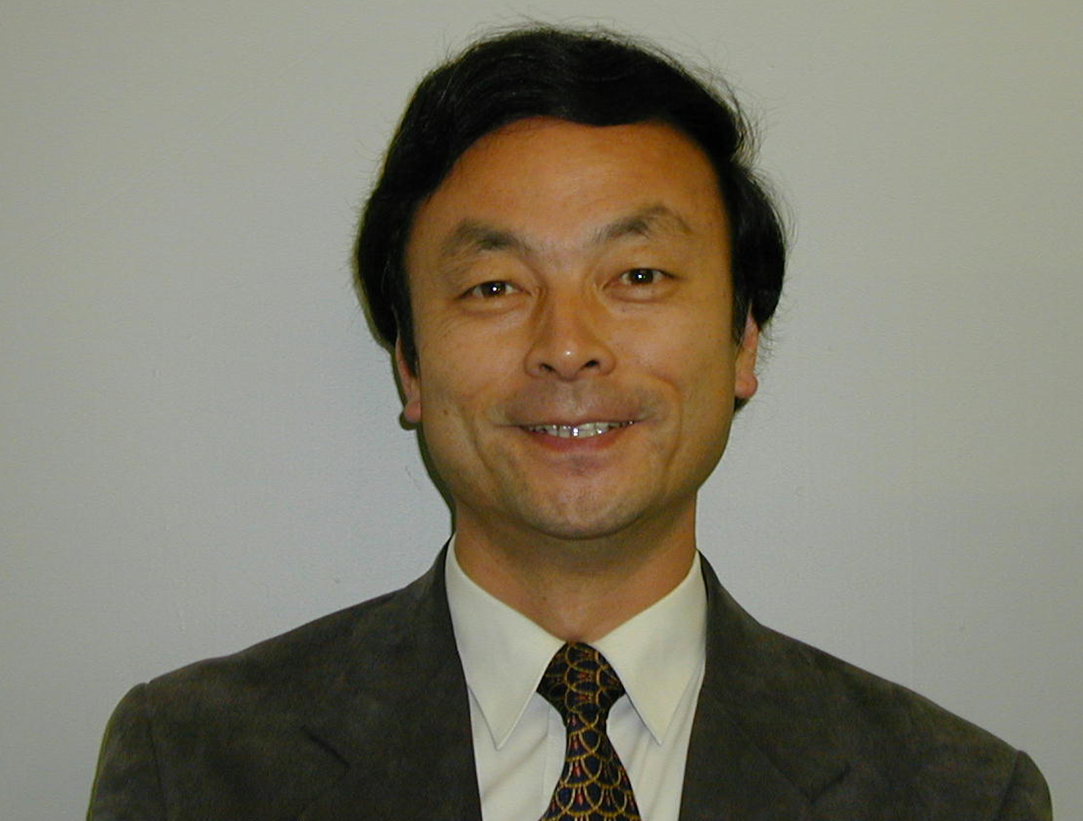
Kaoru HIROTA received the B.E., M.E., and Dr. E. degrees in electronics from Tokyo Institute of Technology, Tokyo, Japan, in 1974, 1976, and 1979, respectively. After being with the Sagami Institute of Technology (1979-1982) and Hosei University (1982-1995), he has been with Tokyo Institute of Technology, Yokohama, Japan. His research interests include fuzzy systems, intelligent robot, image understanding, expert systems, hardware implementation and multimedia intelligent communication. Dr. Hirota is a member of IFSA (International Fuzzy Systems Association (Vice President 1991-1993 and 2005-2007, Treasurer 1997-2001, secretary 2003-2005, Fellow awarded in 2003, president elect 2007-2009)) and SOFT (Japan Society for Fuzzy Theory and Systems (Vice President 1995-1997, President 2001-2003)), and he is an editor in chief of Int. J. of Advanced Computational Intelligence and Intelligent Informatics. A Banki Donat Medal, Henri Coanda Medal, Grigore MOISIL Award, SOFT best paper award in 2002, Acoustical Society of Japan best paper award in 2006, honorary professorships from de La Salle University (2005) and Changchun University of Science & Technology (2007), Civitate Honoris Causa of Budapest Technical University (2007), adjunct professorship from Harbin University of Science & Technology (2007), and honorary doctorate (Honoris Causa) from Bulacan state university (2006) were awarded to Dr. Hirota. He also organized many international conferences/symposiums as a founding chair, a general chair, or a program chair, e.g., in FUZZ-IEEE’95, SCIS2002, and ISCIII2005 (more than 15 in total). He has been publishing about 200 journal papers, about 50 books, and more than 400 conference papers in the field of computational intelligence.
 Fuzzy Logic in Machine Learning Fuzzy Logic in Machine Learning
Eyke Hüllermeier
Department of Mathematics and Computer Science
Philipps-Universität Marburg, Germany
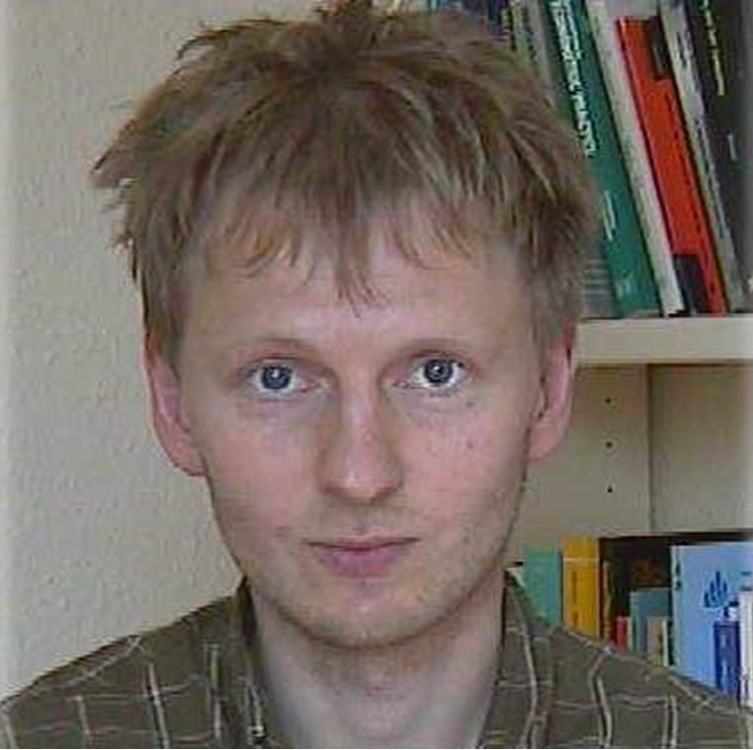
Eyke HÜLLERMEIER is with the Department of Mathematics and Computer Science at Marburg University (Germany), where he holds an appointment as a Full Professor and heads the Knowledge Engineering & Bioinformatics Lab. He holds M.Sc. degrees in mathematics and business computing, a Ph.D. in computer science, and a Habilitation degree, all from the University of Paderborn (Germany). His research interests are focused on machine learning and data mining, fuzzy set theory, uncertainty and approximate reasoning, and applications in bioinformatics. He has published numerous research papers on these topics in leading journals and major international conferences. He is on the editorial board of several journals, including Fuzzy Sets and Systems, Soft Computing, and the International Journal of Data Mining, Modeling and Management. Moreover, he is a board member of the European Society for Fuzzy Logic and Technology (EUSFLAT), a co-ordinator of the EUSFLAT working group on Learning and Data Mining, and head of the IEEE CIS Task Force on Machine Learning.
 Capacities and the Choquet integral in decision making: a survey of fundamental concepts and recent advances Capacities and the Choquet integral in decision making: a survey of fundamental concepts and recent advances
Michel Grabisch
Centre d’Economie de la Sorbonne, Université Paris I
106-112, Bd de l’Hôpital, 75013 Paris, France
Email: michel.grabisch.at.univ-paris1.fr
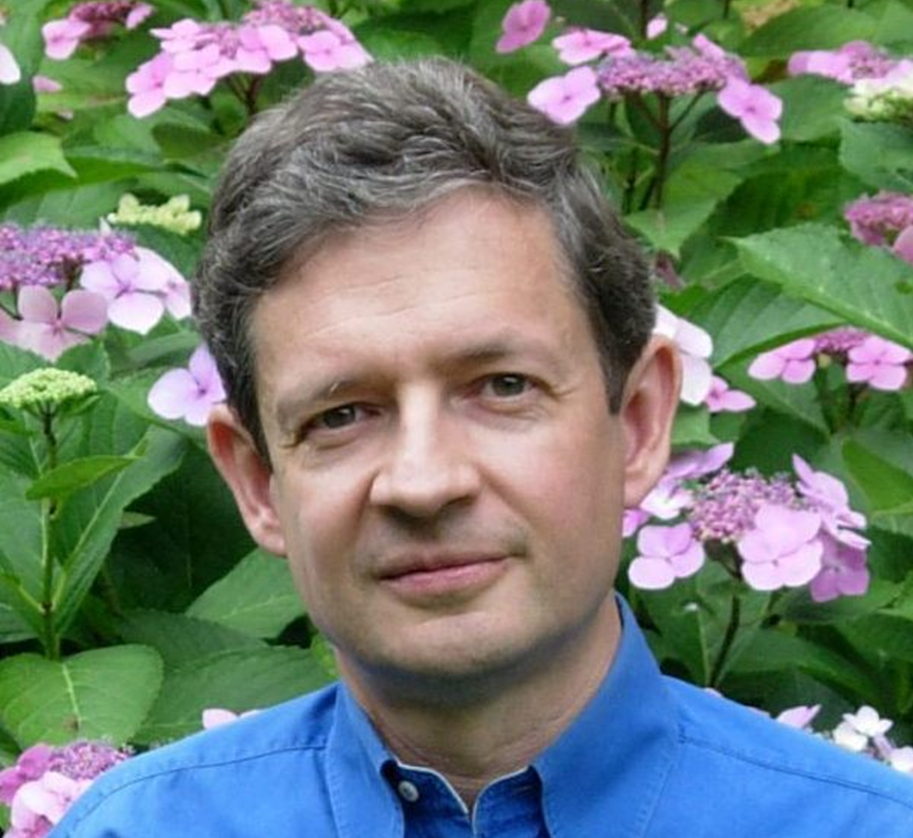
Michel GRABISCH received his graduate engineer diploma in 1979 from the Ecole Nationale des Ingénieurs Electriciens de Grenoble (ENSIEG), specialising in nuclear engineering. He received the Ph.D. degree in signal processing in 1982 from ENSIEG. After a two year post-doctorate at Tokyo Institute of Technology, he joined Thomson-Sintra ASM in 1984, in the Advanced Research Group, and worked on decision theory applied to sonar signals. From 1989 to 1991, he was in detachment at Tokyo Institute of Technology where he conducted research on fuzzy integral, pattern recognition, and fuzzy control with Prof. Sugeno. He was also a participant in the LIFE project (Laboratory for International Fuzzy Engineering Research).From 1991 to 2000, he was at the Central Research Laboratory of Thomson-CSF in projects involving fuzzy logic and decision theory. From 2000 to 2002, he was associate professor at the Université Pierre et Marie Curie, Paris. He is currently a professor in computer science at the Université Panthéon-Sorbonne, Paris. His current interests are fuzzy measures and capacity theory, decision making, fuzzy sets and possibility theory, and discrete mathematics.
 Fuzzy Systems, Choice Paradoxes and Optimal Committees Fuzzy Systems, Choice Paradoxes and Optimal Committees
Hannu Nurmi
Public Choice Research Centre and Department of Political Science
University of Turku, Finland
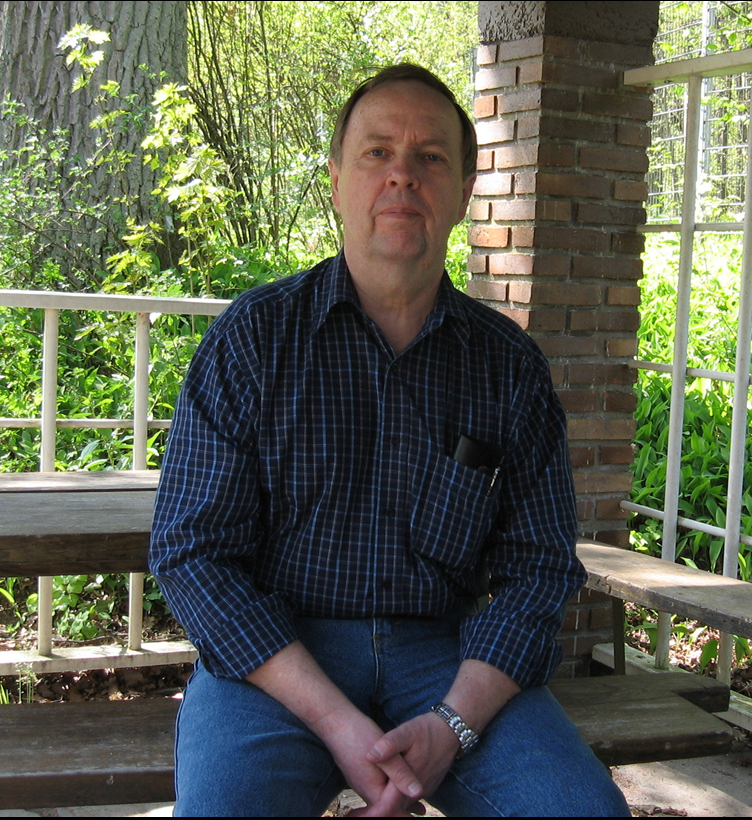
Hannu NURMI received his academic training in University of Turku, Finland, where he obtained his PhD in political science in 1974. For twenty years he was an associate professor of methodology of social sciences before assuming his present position of the professor of political science. In 1990’s he served as the Dean of Faculty of Social Sciences of University of Turku. From 2003 till 2008 Nurmi was an Academy Professor of Academy of Finland. From the beginning of 2008 he has been the Director of Public Choice Research Centre in Turku. He has also been a Senior Fulbright Scholar at Johns Hopkins University (Baltimore. MD, USA), a British Academy Wolfson Fellow at University of Essex (UK) and a visiting professor at University of Minnesota (USA). Nurmi is the author of some 170 scholarly articles and ten books, the most recent ones being Voting Procedures under Uncertainty (Springer-Verlag 2002) and Models of Political Economy (Routledge 2006). Nurmi’s works range from nonexperimental causal analysis techniques to electoral system design, applied game theory and social choice.
|